
U.S. Catholic Bishops Update Funeral Guidelines to Address Liturgical Departures
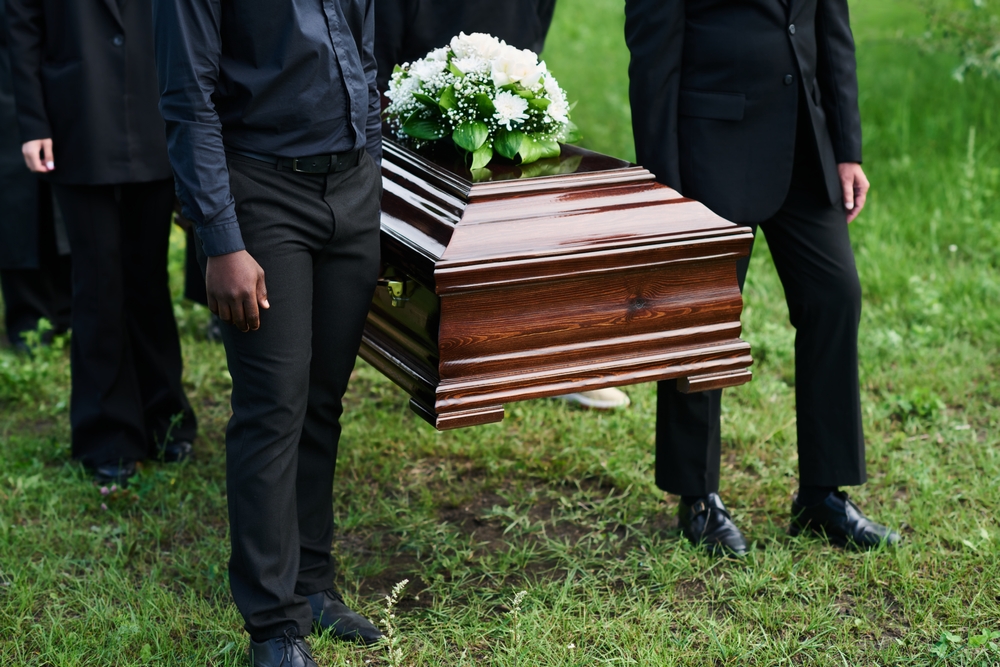
The U.S. Conference of Catholic Bishops has revised funeral policies to address what it describes as growing departures from Church norms, including practices around cremated remains and eulogies.
The United States Conference of Catholic Bishops has issued updated funeral guidelines, according to Catholic News Agency, responding to what church leaders describe as a pattern of departures from established liturgical norms. The revisions address specific practices that had become increasingly common, including the handling of cremated remains and the timing and placement of eulogies within funeral rites.
The Catholic News Agency report identifies these as among several "liturgical anomalies" the bishops sought to bring back into alignment with Church teaching and the Order of Christian Funerals, the official rite governing Catholic burial practices.
Why now, and what is the context
Catholic funeral liturgy carries both sacramental and theological weight, it is understood by the Church not merely as a farewell to the deceased, but as a proclamation of resurrection hope. Church norms around cremation, for instance, have evolved in recent decades: the Church permits cremation but asks that ashes be interred in a sacred place rather than scattered or kept at home, a distinction rooted in its theology of bodily resurrection. Eulogies, meanwhile, occupy an uncertain space in Catholic practice, the Church's rubrics generally direct that a homily, not a personal eulogy, be given at the funeral Mass itself, though tributes may be offered at a vigil or graveside service. The bishops' action suggests these distinctions had blurred in practice across a number of dioceses.
Who is affected and what is at stake
The updated guidelines affect Catholic parishes, clergy, and families planning funerals across the United States. For grieving families, funeral customs are among the most personally significant religious experiences they encounter, often shaped by regional tradition, ethnic heritage, and the pastoral judgment of individual priests. For clergy, the revisions clarify expectations and reduce ambiguity about what is and is not permitted within the rite. For the broader Church, the action reflects an ongoing tension between liturgical uniformity, which preserves doctrinal coherence, and the pastoral flexibility that local communities sometimes develop to meet the emotional needs of mourning families.
What remains unknown or unverified
The source summary does not specify which practices were most prevalent, which dioceses or regions saw the greatest departures, or what mechanisms the bishops have established for implementation and accountability. It is not reported whether the revised guidelines carry binding disciplinary weight or function as renewed guidance. The full text of the bishops' document was not summarized in the available source material, and the degree to which individual bishops or dioceses were consulted in the process is not described.
---
Four-lens scores, each out of 10. Biblical Alignment 5. Prophetic Significance 5. Source Credibility 8. Humanities Impact 5.
Why this assessment
Read the four lenses together, not the total. A high score does not mean a story is true, morally good, prophetically fulfilled, or endorsed by Dot 1 News; a low score does not mean it is false or unimportant. Source Credibility concerns evidence only and is separate from theological alignment.
D1‑4LS assessment · an experimental framework still being tested. How the scoring works
Loading…