
Wildfire Smoke From Canada Drifts Across Ontario, Quebec, and Parts of the United States
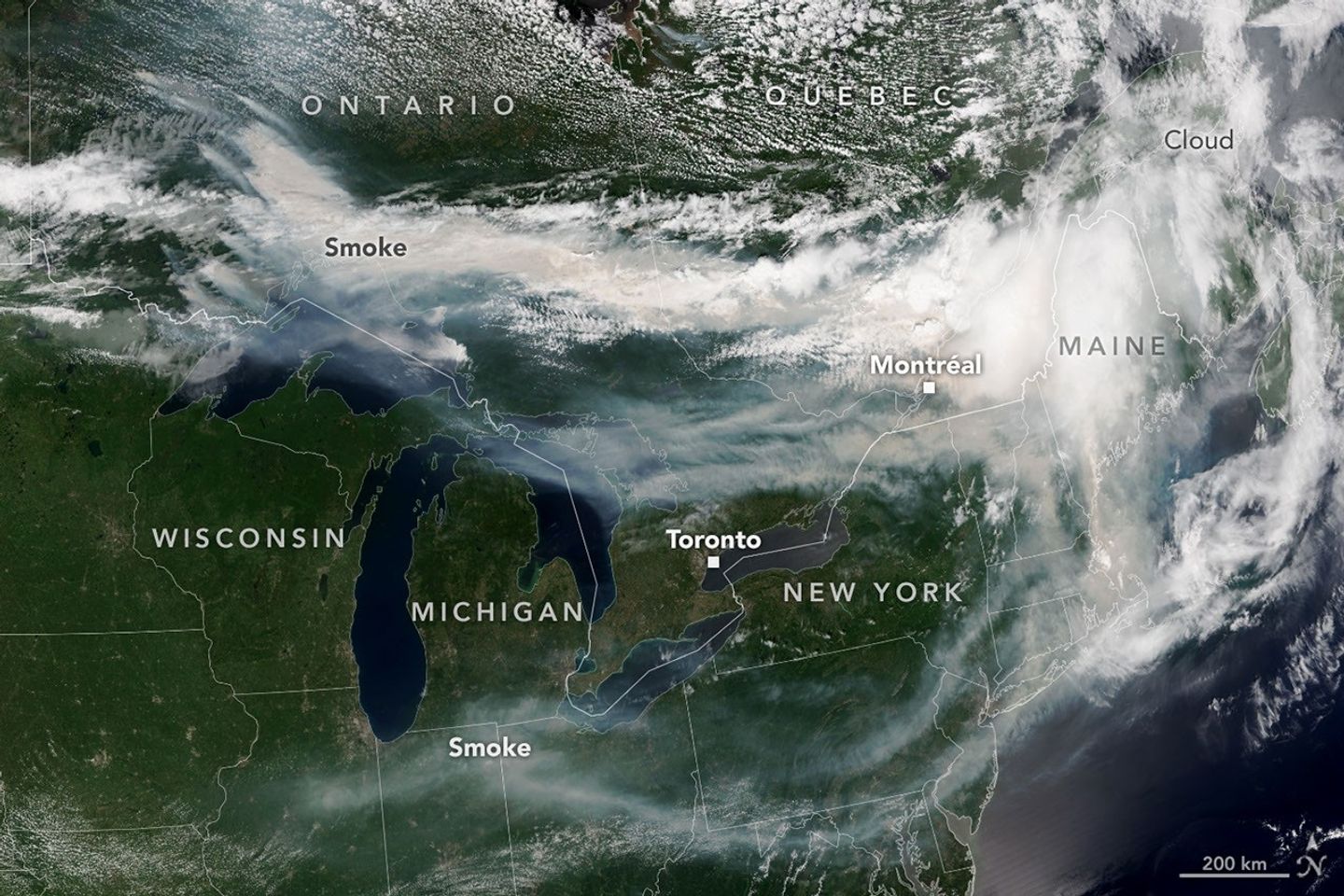
Canadian wildfires have sent smoke plumes east across Ontario and Quebec and into portions of the U.S. Midwest and Northeast, according to NASA, Breaking News.
Smoke from Canadian wildfires has moved eastward across Ontario and Quebec and into sections of the U.S. Midwest and Northeast, according to NASA — Breaking News. The agency reported the development on July 16, 2026, drawing on earth observation data to document the plumes' reach across a broad swath of the continent.
Wildfires in Canada's interior have in recent years produced smoke events that cross provincial and national boundaries, affecting air quality at significant distances from the fires themselves. The NASA report situates this event within that pattern, though the feed summary does not specify the precise origin points of the current fires, their acreage, or what conditions are driving their intensity at this moment.
**Who Is Affected and What Is at Stake**
Residents across a wide geographic corridor, from central Canada through portions of the American Midwest and Northeast, may be experiencing reduced air quality as the smoke moves through. Communities with elevated sensitivity to air quality conditions, including those with respiratory illness, the elderly, and young children, tend to face the most direct health consequences in such events. The source does not identify specific cities, population figures, or air quality index readings.
**What Remains Unknown**
The NASA feed summary is brief. The scale of the fires, the timeline for smoke dispersal, whether containment efforts are underway, and any governmental air quality advisories in the affected regions are not detailed in the source material. Readers seeking real-time air quality guidance for their specific location should consult local public health authorities or air quality monitoring services independent of this report.
---
**
Four-lens scores, each out of 10. Biblical Alignment 5. Prophetic Significance 5. Source Credibility 8. Humanities Impact 5.
Why this assessment
Read the four lenses together, not the total. A high score does not mean a story is true, morally good, prophetically fulfilled, or endorsed by Dot 1 News; a low score does not mean it is false or unimportant. Source Credibility concerns evidence only and is separate from theological alignment.
D1‑4LS assessment · an experimental framework still being tested. How the scoring works
Loading…