
Senate Democrats Block Annual Defense Bill, Citing Ongoing U.S. Military Action Against Iran
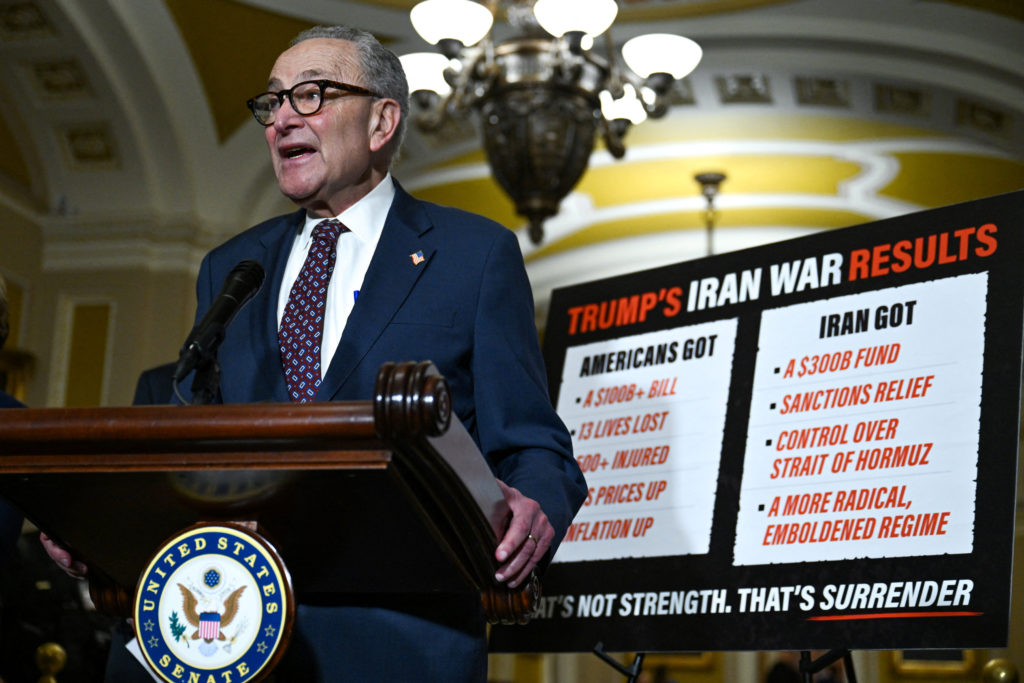
Senate Democrats, led by Minority Leader Chuck Schumer, declined to advance a $1 trillion defense authorization bill, citing the administration's continued military engagement with Iran now entering its fifth month.
Senate Democrats moved to block the National Defense Authorization Act, the annual legislation that authorizes U.S. military spending and policy, according to PBS NewsHour, Politics. Minority Leader Chuck Schumer announced his opposition, and other key Democratic senators said they could not support the bill while U.S. military action against Iran continues without a visible conclusion.
The outlet reports that the conflict with Iran has now extended into a fifth month, with no clear endgame described by the administration. The NDAA, which authorizes approximately $1 trillion in defense activity, is among the most consequential pieces of annual legislation Congress considers, and its failure to advance carries significant implications for military planning and readiness.
**Why This Matters Now**
The NDAA has passed in some form for more than six decades, making a blockage at this stage unusual. Democrats appear to be using the bill's procedural advancement as a pressure point, linking routine defense authorization to questions about the scope and authorization of an ongoing military conflict. The timing, mid-July, when the legislation typically works through floor debate, adds urgency to the standoff.
**Who Is Affected and What Is at Stake**
The bill's delay affects defense policy across a wide range of areas beyond the Iran conflict itself, including military pay, procurement, and force structure decisions that touch hundreds of thousands of service members and defense personnel. A prolonged impasse could complicate planning cycles for the Pentagon and military branches. For Congress, the dispute raises questions about legislative authority over the use of military force, a tension that has persisted across administrations of both parties.
**What Remains Disputed, Unknown, or Unverified**
The source does not indicate whether a procedural path forward exists or whether negotiations between Senate leadership are underway. The administration's stated rationale for the continued military engagement, the precise legal authorization under which it operates, and the conditions under which it might conclude are not detailed in the available reporting. It is also not yet clear whether any Republican senators have expressed reservations about the bill or the conflict's duration. Readers should treat this as a developing situation; significant details remain unconfirmed.
Democrats who oppose the bill argue that advancing routine defense authorization effectively normalizes an open-ended military engagement that Congress has not formally debated or authorized. Supporters of the legislation argue that withholding the NDAA puts military readiness and service members' interests at risk over a dispute that belongs in a separate legislative forum.
---
**
Four-lens scores, each out of 10. Biblical Alignment 5. Prophetic Significance 5. Source Credibility 8. Humanities Impact 5.
Why this assessment
Read the four lenses together, not the total. A high score does not mean a story is true, morally good, prophetically fulfilled, or endorsed by Dot 1 News; a low score does not mean it is false or unimportant. Source Credibility concerns evidence only and is separate from theological alignment.
D1‑4LS assessment · an experimental framework still being tested. How the scoring works
Loading…