
Justices Kagan and Coney Barrett Appear Together Before Congress to Present Supreme Court Budget
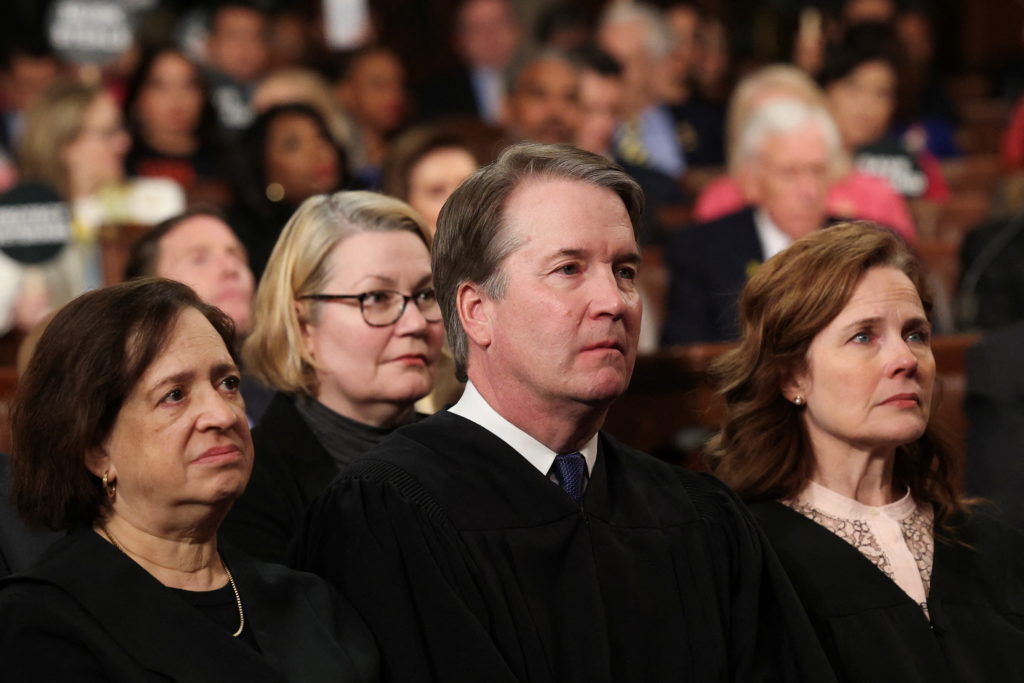
Two Supreme Court justices from opposing ends of the ideological spectrum testified jointly before a House subcommittee on the court's proposed 2027 budget, a rare institutional moment worth understanding.
Two sitting Supreme Court justices, Elena Kagan and Amy Coney Barrett, testified Tuesday before a House Appropriations subcommittee regarding the high court's fiscal year 2027 budget request, according to PBS NewsHour, Politics. The appearance is notable in part because the two justices are widely regarded as representing different judicial philosophies, yet appeared together in a shared institutional role.
The outlet reports the hearing was convened by the subcommittee with jurisdiction over the judicial branch's appropriations. Budget testimony from sitting justices before Congress is uncommon, and joint appearances of this kind are rarer still.
**Why This Matters Now**
The Supreme Court has faced sustained public and legislative scrutiny in recent years over questions of ethics, transparency, and institutional accountability. Congressional appropriations hearings represent one of the few formal mechanisms through which the legislative branch may engage directly with the judiciary on operational matters. The 2027 budget request arrives in that broader context, though the specific figures, requests, or priorities discussed in Tuesday's hearing were not detailed in the source material.
**Who Is Affected**
The court's budget affects its administrative capacity, staffing, and security, the last of which has been a documented concern following incidents at justices' private residences in prior years. Any reader who interacts with the federal court system, directly or indirectly, has a stake in the institution's resourcing and integrity.
**What Remains Unknown**
The source item does not detail the specific budget figures under discussion, the questions posed by subcommittee members, or how either justice characterized the court's needs. It is not known from this report whether any exchanges addressed broader institutional questions beyond the budget line items. Readers seeking the substance of the testimony should consult the full hearing record when it becomes available.
---
**
Four-lens scores, each out of 10. Biblical Alignment 5. Prophetic Significance 5. Source Credibility 8. Humanities Impact 5.
Why this assessment
Read the four lenses together, not the total. A high score does not mean a story is true, morally good, prophetically fulfilled, or endorsed by Dot 1 News; a low score does not mean it is false or unimportant. Source Credibility concerns evidence only and is separate from theological alignment.
D1‑4LS assessment · an experimental framework still being tested. How the scoring works
Loading…