
Christopher Nolan's Odyssey Adaptation Draws Debate Over Casting and the Nature of Classical Literature
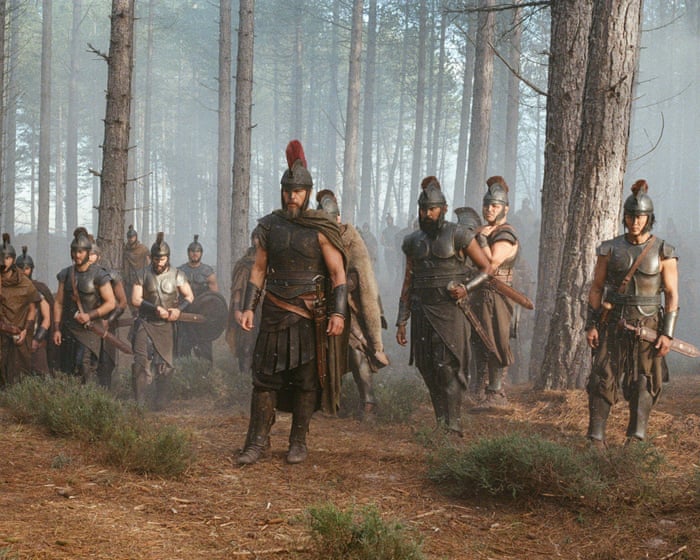
Christopher Nolan's upcoming film adaptation of Homer's Odyssey has drawn public commentary about casting choices, prompting broader questions about how ancient stories are interpreted across cultures and eras.
Christopher Nolan's forthcoming Hollywood adaptation of Homer's *Odyssey* is generating public discussion ahead of its general release, according to The Guardian — Culture. Central to the debate is the casting of Kenyan-Mexican actor Lupita Nyong'o in the role of Helen of Troy, a decision that prompted public criticism from Elon Musk on the social media platform X.
The Guardian's editorial board reports that Musk characterized the casting as disrespectful to Homer's legacy, while the outlet argues the objection reflects a misunderstanding of mythology's historically fluid nature. The film arrives as one of the most anticipated cinematic releases in recent memory, bringing to screen a story that has shaped Western and world literature for nearly three thousand years.
**Why This, Why Now**
The timing reflects a broader cultural moment in which questions about representation in art and the stewardship of classical traditions are openly contested. Homer's *Odyssey* — the account of Odysseus's decade-long journey home following the Trojan War — has been reimagined repeatedly across centuries: Virgil reworked it in the *Aeneid*, James Joyce relocated it to early 20th-century Dublin in *Ulysses*, and Margaret Atwood gave it a feminist retelling in *The Penelopiad*. Nolan's adaptation is the latest in a long lineage of creative engagement with the source material.
**Who Is Affected and What Is at Stake**
The conversation touches audiences, filmmakers, classicists, and anyone with an interest in how ancient stories are carried forward. For the film industry, the debate raises questions about the range of actors considered for roles drawn from mythology. For scholars and educators, it opens discussion about what faithfulness to classical texts actually requires. For general audiences, the film offers an opportunity to encounter one of humanity's most enduring narratives in a new form.
**What Remains Disputed or Unverified**
The source item is an editorial opinion piece, not a news report, and reflects The Guardian's stated position rather than a neutral survey of the debate. The precise content and framing of Musk's remarks are characterized by the outlet but not quoted in full in the available feed summary. Critical and public reception of the film itself remains unknown ahead of its release. Whether the casting choice affects the film's box-office performance or cultural reception is not yet established.
Those who object to the casting argue that fidelity to the described origins of mythological figures is a matter of cultural integrity and respect for source texts. Those who support the casting contend that mythology has always been adapted across cultures and that artistic interpretation is a legitimate and longstanding tradition.
---
**
Four-lens scores, each out of 10. Biblical Alignment 5. Prophetic Significance 5. Source Credibility 8. Humanities Impact 5.
Why this assessment
Read the four lenses together, not the total. A high score does not mean a story is true, morally good, prophetically fulfilled, or endorsed by Dot 1 News; a low score does not mean it is false or unimportant. Source Credibility concerns evidence only and is separate from theological alignment.
D1‑4LS assessment · an experimental framework still being tested. How the scoring works
Loading…