
USDA Funding Cuts Reach Small and Beginning Farmers, Raising Questions About Rural Access
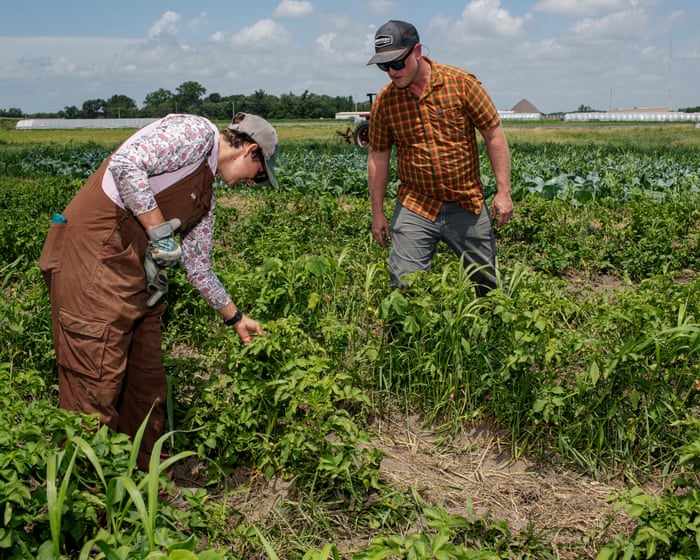
Federal agricultural funding reductions, framed by the administration as eliminating DEI and wasteful spending, are affecting small-scale and first-generation farmers who relied on those programs to enter the industry.
The U.S. Department of Agriculture has pulled funding from programs that supported small and beginning farmers, according to The Guardian — Environment, with the administration citing concerns about diversity, equity, and inclusion initiatives and wasteful spending within the agency. The cuts are affecting growers who had no family connections to agriculture and depended on USDA resources to establish or expand their operations.
The outlet reports on Lawrencia Rogers, a 33-year-old Iowa farmer who cultivates an eighth of an acre on land with a long agricultural history, growing broccolini, lettuce, and beans. Rogers represents a broader category of farmers — those without inherited land, capital, or industry networks — who used federal programs as a pathway into a profession that is otherwise difficult to enter.
**Why This Matters Now**
The cuts arrive after a campaign season in which farming communities were courted heavily by the Trump administration. Iowa ranks among the most agriculturally productive states in the country, yet access to farming remains concentrated among those with existing land or family ties to the industry. The USDA programs now under review were designed in part to broaden that access.
**Who Is Affected and What Is at Stake**
Small-scale and first-generation farmers appear to be among those most directly affected, particularly those who entered or planned to enter agriculture through USDA-supported pathways. For some, the loss of funding threatens operations still in early stages. The broader question is whether reductions to these specific programs will affect the long-term diversity and resilience of the American agricultural sector, or whether alternative support structures will emerge.
**What Remains Disputed or Unverified**
The Guardian's reporting is drawn from a limited number of individual accounts, and the full scope of which programs were cut, by how much, and under what legal or budgetary authority has not been fully detailed in the available summary. The administration's stated rationale — that the funding involved DEI priorities or inefficient spending — has not been independently assessed here, nor has any official USDA statement been quoted directly. It is not yet clear whether affected farmers have formal avenues for appeal or whether replacement funding mechanisms are under consideration.
---
**
Four-lens scores, each out of 10. Biblical Alignment 5. Prophetic Significance 5. Source Credibility 8. Humanities Impact 5.
Why this assessment
Read the four lenses together, not the total. A high score does not mean a story is true, morally good, prophetically fulfilled, or endorsed by Dot 1 News; a low score does not mean it is false or unimportant. Source Credibility concerns evidence only and is separate from theological alignment.
D1‑4LS assessment · an experimental framework still being tested. How the scoring works
Loading…